Special IDs and good numbers: why users pay for a number
Why a rare account ID has value, how to turn number patterns into nine clear tiers, and the good-number badges, special-ID flames and custom ID art that make it visible.
svgastore team5 min read

Compare two account IDs: 40718263 and 88888888. Both do exactly the same job, but only one gets screenshotted, read out in a room and copied into a bio. This post looks at why special and good-number IDs have value, how to turn that value into a tier system users can understand, and the badge art that makes a good number visible.
Why a number is worth paying for
An ID is the one part of a profile that cannot be copied. Two users can wear the same avatar frame; only one can be 88888888. That scarcity is what people pay for, and it comes in a few flavours:
Memorability. A pattern is easy to say aloud and type into search, so friends find you faster.
Status. A rare number signals an established or committed account without the user saying a word.
Meaning. Birthdays, lucky digits and anniversaries make a number personal.
Shortness. Short IDs are scarce by simple arithmetic: there are only 90 two-digit numbers and 900 three-digit ones.
None of this works unless other people can see that the number is special. That is the badge's job.
Turn patterns into tiers
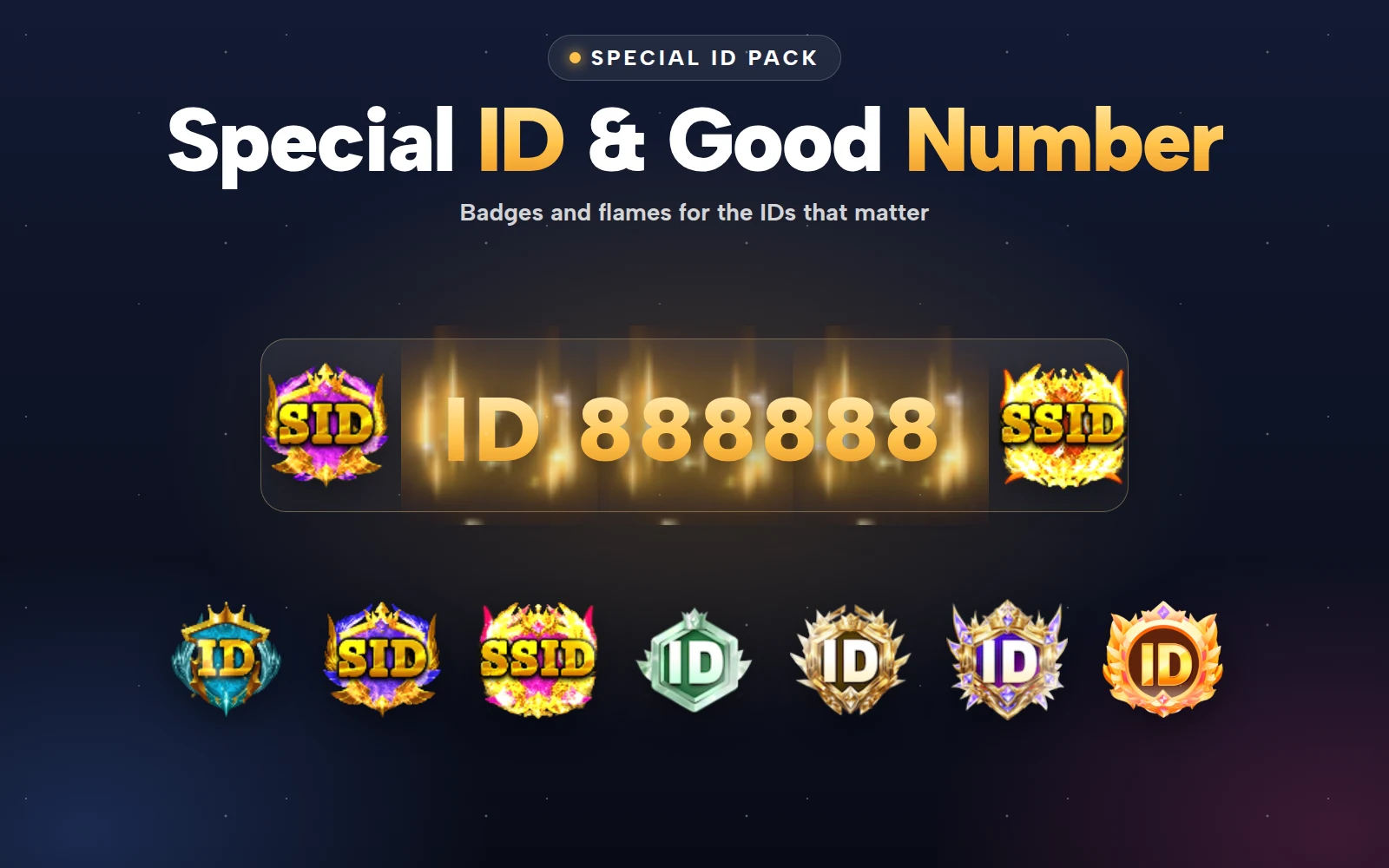
The Badges & Nameplates collection carries good-number badges from Lv 1 to Lv 9. Nine tiers is enough to rank patterns without making the scale hard to read. One workable way to assign them:
Lv 1–3: a pattern inside a normal-length ID, such as a run of three repeated digits or a short sequence.
Lv 4–6: strong patterns across most of the ID, such as long repeats, full ascending runs or mirrored numbers.
Lv 7–9: short IDs, with the shortest at the top.
The files hint at a split like this: at 90x90 the Lv 3 badge is 97 KB, then Lv 4 jumps to 155 KB and every tier above it stays heavier.
| Tier | 90x90 badge | 36x36 badge |
|---|---|---|
| Lv 1 | 88 KB | 46 KB |
| Lv 2 | 92 KB | 57 KB |
| Lv 3 | 97 KB | 49 KB |
| Lv 4 | 155 KB | 50 KB |
| Lv 5 | 157 KB | 51 KB |
| Lv 6 | 161 KB | 52 KB |
| Lv 7 | 171 KB | 60 KB |
| Lv 8 | 179 KB | 59 KB |
| Lv 9 | 183 KB | 59 KB |
Every file in both sets is an SVGA on a 2-second loop at 15 fps. There is also an alternate 90x90 series running from Lv 1 to Lv 9; its Lv 1 to Lv 6 files range from 87 KB to 161 KB.
Whatever rules you choose, publish them in the app. If users can see why one number is Lv 2 and another Lv 6, the tiers feel fair rather than arbitrary, and nobody has to open a support ticket to find out.
 90×90 · 2s
BadgesSVGA
UID Good Number Lv 1
 90×90 · 2s
BadgesSVGA
UID Good Number Lv 5
- 90×90 · 2s
BadgesSVGA
UID Good Number Lv 9
Two sizes, two places
The 90x90 badges belong on the profile card and the ID page, where there is room for detail. The 36x36 versions are for chat lines, seat labels and member lists.
The small badges are not proportionally small in bytes: 46 KB to 60 KB at 36x36, against 88 KB to 183 KB at 90x90, because they are still full animated loops. In a busy chat where several good-number holders are talking, cache each tier's file once, reuse it across rows, and animate only the badges that are on screen.
Special ID flames: one file per length
A special ID is a very short ID of one, two or three characters. A single glow stretched to fit different lengths would distort, so the store has a separate Special ID Flame for each length. The implementation is simple:
Count the ID's user-visible characters, not its bytes, so non-Latin characters are measured correctly.
Pick the flame that matches the length, and never scale one to fit.
Fall back to the standard good-number badge for anything longer than three characters.
 36×48 · 3s
BadgesSVGA
Special ID Flame · 1 char
 72×48 · 3s
BadgesSVGA
Special ID Flame · 2 chars
 108×48 · 3s
BadgesSVGA
Special ID Flame · 3 chars
Custom IDs: a display alias, not a new account
A custom ID lets a user choose their number outright. The Custom ID Badge, a gold laurel medallion with a glowing "ID" centre, marks it beside the name, and a Profile Custom ID Background sits behind the number on the profile page.
On the engineering side, keep the original numeric ID as the account's permanent key and treat the custom ID as an alias that can be changed, expired or revoked. Then settle the policy before launch:
Reserve numbers that could impersonate staff or official accounts.
Block offensive strings, including ones that only read badly in another language.
Decide whether custom IDs expire, can be transferred, or return to the pool when an account closes.
Consider tying the top tiers to VIP or SVIP status as a perk rather than a straight sale.
Keep bought status apart from assigned roles
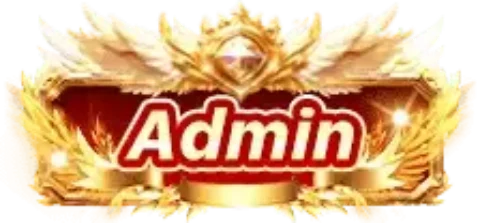
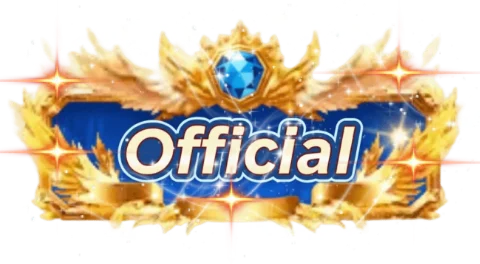
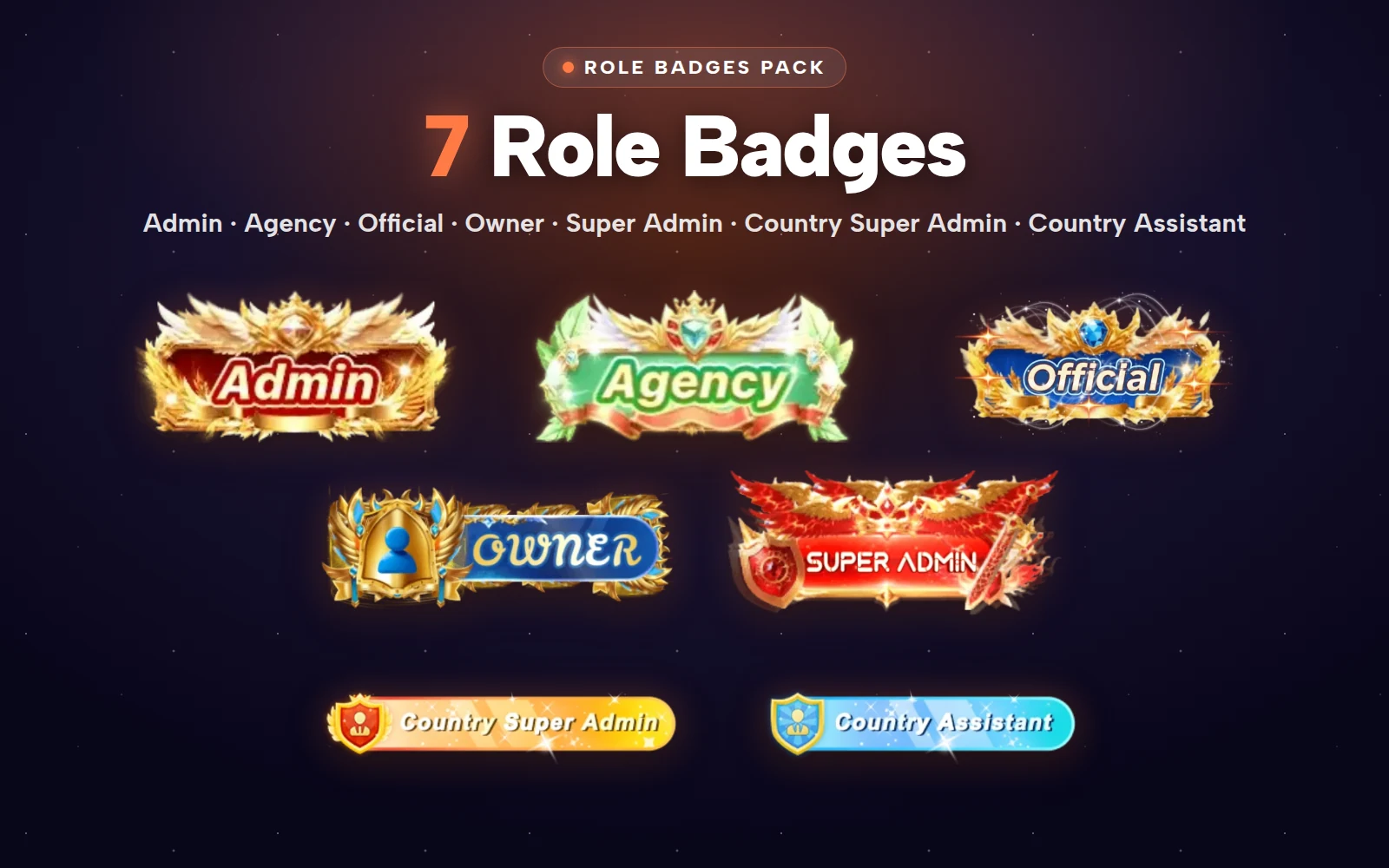
A good number says "this person invested". A role badge says "this person can moderate". Users must never confuse the two. Staff plates such as the Admin Flame Plate and the Official Blue Plate carry readable words, while good-number badges are emblems. Keep it that way: the word is what users trust, so never ship a purchasable badge with role-like text on it. The Role Badges Pack bundles five name-plate badges for staff roles, for less than buying them one by one.
Next step
Draft your tier rules on a single page, covering which patterns map to which level and how short IDs are handled, then choose the art. The Special ID & Good Number Pack brings together the good-number badges Lv 1–9 and the special-ID flames: 22 files for less than buying them one by one. Check each tier at chat size in the free viewer before you put a price on it.